PA for an entrepreneur – What do they want and expect
Being a PA for an entrepreneur is very different to being a PA in the Corporate world. What do top business owners really want from their Personal Assistants?
When you’ve spent years working as a PA, secretary, or administrator, you start to notice that no two roles are ever the same. But once you step into the world of supporting high-level entrepreneurs, everything changes. The expectations go up, the pace quickens, and the pressure to perform quietly in the background becomes a daily reality. And yet, for the right person, it’s one of the most rewarding experiences you’ll ever have.
Let’s talk honestly about what business owners at the top really expect from their Personal Assistants.
Behind the Glamour: The Real Life of a PA to an Entrepreneur
If you think being a PA to a millionaire is all jet-setting and VIP events, you’re not wrong—but that’s only half the story. The reality is far more grounded. One minute you’re arranging a cross-continent investor call, and the next, you’re sorting out why the office fridge has broken down just before a lunch meeting.
You’re not just running errands or following instructions. You’re thinking ahead, connecting the dots, and anticipating needs before they even land on your to-do list. You see, in the entrepreneurial world, the lines between the big picture and the tiny details blur. Everything matters.
A successful entrepreneur expects their PA to treat the business like it’s their own. When a client comes in and the welcome feels seamless, or when a tight deadline is met without drama, that’s a reflection of your quiet, diligent work behind the scenes. It’s not just about doing a job; it’s about creating an impression that mirrors the values and standards of the person you support.
Business and Personal Lives: There’s No Off Switch
Working with entrepreneurs means understanding that their business is their life. There’s rarely a clear boundary between work and personal time, and a top-tier PA understands how to support both.
You might find yourself organising a family holiday that includes three investor meetings, or booking a dinner that doubles as a celebration and a business pitch. One doesn’t end where the other begins. That’s just the nature of the job.
Imagine this: a last-minute business call comes through on a Sunday evening, just as your boss is about to head out to a family event. Without missing a beat, you rearrange the timing, send the agenda to their tablet, and make sure someone else has the car keys ready so they can jump on the follow-up call straight after. That’s not just admin. That’s strategy, empathy, and initiative rolled into one.
Trust: The Backbone of Every Successful Relationship
If there’s one thing every successful business owner values above all else, it’s trust. And when they find someone who can be completely trusted, they hold on tight.
A PA in this space will be privy to sensitive information, both professional and personal. You’ll know things that could impact reputations, finances, and relationships. Your boss expects you to keep everything confidential, without reminders
But trust doesn’t stop at discretion. It also means your boss trusts you to do what you say you’ll do. That when they ask for something, it will be handled on time, professionally, and without the need for chasing.
Over time, you become more than a PA. You become the person they rely on, their sounding board, and sometimes the only person in the room who’s willing to tell the truth when no one else will. That kind of trust is earned and priceless.
What Skills Really Matter for a PA for an entrepreneur
Of course, technical skills are a must. You need to know how to manage calendars, organise travel, and handle email with military precision. But what is the real value you bring? That comes from your mindset.
You need to think like a business owner. If your boss mentions a new market, you’re already researching competitors and pulling together a plan. If a diary conflict pops up, you’re not just flagging it; you’re proposing three solutions.
Emotional intelligence is just as vital. You’re the one fielding calls from high-profile partners, worried investors, and the headteacher calling about a missed parents’ evening. Being able to switch tone and adapt your approach is what sets you apart.
And above all, being a PA for an entrepreneur requires resilience. Entrepreneurs live in a world of constant change, plans shift, opportunities appear out of nowhere, and some days feel like you’re juggling flaming swords. Your job is to keep the show running without letting anything hit the ground.
It’s a Career Accelerator
Supporting a top business owner can fast-track your career in ways no other job can. You’re in the room where decisions are made. You see how businesses grow. You learn to think strategically, communicate with impact, and build a network that others would envy.
Many PAs go on to start their own businesses or step into leadership roles because they’ve had a front-row seat to how success is built from the ground up. The expectations are high, yes. But so are the rewards.
The Role Is a Partnership
Ultimately, a high-level PA isn’t just an assistant. You’re a partner. You’re someone your boss depends on to make life smoother, smarter, and more productive.
You’re not just booking meetings. You’re protecting their time.
You’re not just proofreading documents. You’re safeguarding their reputation.
You’re not just making plans. You’re making life easier.
And when they succeed, you know you’ve played a part in that. That’s the real reward.
If you’re serious about stepping into this level of work, then proper training is essential. Supporting a high-net-worth entrepreneur is a specialised role, and our courses at myPA Business are designed to help you build the skills, confidence, and mindset needed to thrive truly.
So whether you’re already in the role or aspiring to reach this level, know this: the expectations may be high, but the opportunity is even greater. And with the proper support, you’ll be ready for every challenge that comes your way.
You may also be interested in the following articles
Even the most experienced PA or secretary can have a bad day. You sent the wrong email. The meeting link doesn’t work. Your boss’s presentation pointer dies even though you checked it before they left the office, and packed spare batteries, and somehow, it’s still your fault. Then that quiet voice that lives at the back of your head rears its ugly head, and starts to speak, “You’re rubbish at this job”, “That was such a stupid mistake to make”. Silently, you chastise yourself. These moments don’t define you. But they can rattle your confidence, and over time, those knocks can leave you doubting yourself.
The truth is that administrative professionals, like you, are the backbone of the workplace. You juggle logistics, conflicting personalities, last-minute changes, and a sea of expectations. When it all goes smoothly, nobody notices. But when something goes wrong, the spotlight lands firmly on you.
Let me say this clearly: confidence at work isn’t about being perfect. It’s about recognising your value, learning from the rough days, and remembering that one mistake doesn’t undo a career’s worth of good work.
Let me tell you a story. It’s a true story of a young lady who attended one of my training courses. Her boss had decided she was useless at her job and needed training to become a better PA. She broke my heart because, despite being fantastic at her job with checks and counterchecks in place, she doubted her skills. (Names have been changed for confidentiality.
When a Bad Boss Knocks Your Confidence at Work
Laura had worked as a senior PA for over ten years when she joined our PA and Secretary training course. Her boss, a senior executive with a temper, relied on her to manage high-level board meetings, prepare presentations, and handle the tech, despite having minimal IT skills himself. He would panic when he couldn’t find his mouse on the screen.
For one major presentation, she had prepared everything in the minutest details. She even checked the clicker in advance and popped in a fresh set of batteries for good measure. She packed a second set of batteries and put them in his Information pack along with his itinerary. The itinerary included details such as the pickup time from his house to the train station, the platform he needed to catch a train to London. He had step-by-step instructions on what he needed to do when he arrived in London. She even had the name of the driver who would collect him at Euston Train Station when he arrived. She had prepared everything.
Then it went wrong
Midway through the presentation, the clicker failed. He was furious. When he got back to the office and in front of everyone, he snapped, “Can you try doing your job properly for once?” Laura was devastated. She had done everything right. She was humiliated, then yelled at again in private. That night, she went home feeling like a failure. This left her feeling devastated and convinced that she couldn’t do her job correctly.
As with everything, there is often a knock-on effect of incidents like this. She had lost her confidence at work and started to make more mistakes. In the end, her boss insisted that she attend a training course to pick up the skills she needed to be a ‘decent PA’. This is where I met Laura. Laura came onto my course not because she lacked skills but because that one moment, that one man, had made her doubt herself. She didn’t need fixing; she needed reminding that she was brilliant.
Weeks later, I was told that she had found the courage to report the incident. HR investigated, and her boss received a written warning. He later left the department.
How Do You Rebuild Confidence at Work?
If you’ve had your own “Laura moment,” please know you are not alone. Confidence isn’t a constant. It rises and falls, especially when your work is so visible and often, so undervalued. Here are ten gentle but powerful ways to rebuild your confidence, based on real experiences and practical strategies.
1. Keep a Success Journal
Each day, write down a minimum of three things you did well that day. They don’t have to be monumental achievements. Maybe you juggled a busy diary successfully. Maybe you calmed a colleague under pressure. Perhaps you just kept it all together.
When doubt creeps in, and it will, your journal becomes a quiet but powerful reminder of how capable you really are. Never underestimate the power of a gentle reminder of how brilliant you are.
2. Own It… Then Let It Go
Mistakes happen. Own them. Apologise if needed. Then move on. There is no rule that says one slip-up wipes out ten years of good work. You are allowed to make mistakes; everyone does. You and your career are not a mistake.
3. Flip That Inner Critic
You wouldn’t tell a colleague or your best friend, “You’re rubbish” because a Zoom link failed, so why say it to yourself? You are just as crucial as your colleague or best friend. Instead, say, “I’m learning. I’m resilient. I handled that as best I could.”
Confidence is built one kind word at a time, especially when it’s from you to you. Whether you say it silently to yourself, out loud or have it written on a post-it note attached to your computer screen. Be kind to yourself and set expectations for yourself.
4. Don’t Swallow Toxic Feedback
Constructive feedback is valuable. Toxic comments are not. If your boss humiliates you, that’s not criticism, it’s bullying. Like Laura, you have options. Talk to HR. Speak to someone you trust. You deserve respect at work. Set your boundaries and don’t let anyone step over them. You are a valuable member of the workforce, and your job is just as important as your boss’s. Remember, without you, they couldn’t do half the work they do.
5. Surround Yourself with Support
Confidence thrives in a community. Join professional networks. Seek out positive colleagues. Join our myPA Business membership, where support, stories, and solidarity flow freely.
You are not alone. You never were.
6. Learn Something New
Sometimes, a drop in confidence is your brain’s way of nudging you to grow. Take a short course. Explore new software. Refresh your knowledge. Try our Confidence & Awareness course; it was built for people just like you. A small win can reignite your belief in what you bring to the table. You are more powerful than you realise.
7. Practice Saying No
It’s tempting to take on everything. But confidence grows when you set clear boundaries. Know what your boundaries are and be clear about them. You don’t want your boss to call you when you are on holiday or on a Sunday. If you are asked to do a task that will take hours to complete and you’re already stacked, try saying, “I’m fully booked this morning. Can we review this this afternoon?”
Be Polite, professional, empowering and use your big girl voice. Practice saying NO, practice saying I will but…
8. Focus on What You Can Control
You can’t stop the internet from crashing or your boss being in a mood. But you can manage how you respond. Your boss doesn’t live in your head; they don’t pay rent, so don’t let them in. Their bad mood, their mistakes are not yours.
Breathe. Stay calm. You’ve handled worse.
9. Ask for Real Feedback
Don’t wait for your annual appraisal. Ask someone you trust: “What do you think I did well in that meeting? Is there anything I could improve?” The right feedback builds confidence and is a fantastic learning tool. Feedback is not to be feared. It’s the starting point of you becoming better than you are right now.
10. Be Kind to Yourself
If your best friend came to you in tears over a mistake, you wouldn’t tear them down. You’d listen and remind them of their worth, of how good they are. You deserve the same compassion from yourself. Speak kindly. Treat yourself gently. Celebrate your wins, even if it is getting through a tough day. You deserve it.
Final Thoughts: Confidence at Work isn’t a trait, it’s a Practice
The world of administration isn’t easy. You’re often expected to be invisible until something goes wrong. But here’s the truth: your role matters. You matter. Confidence at work isn’t something you’re either born with or without. It’s something you build, one moment at a time.
If you’ve had a knock, take the next step. Explore our Confidence & Awareness Course. It’s here for you, just like we are.
More importantly, remember that you are not broken, you are not failing, and you are brilliant. You are just getting started.
Have you heard of the term CPD? Do you know what it means, and, more importantly, do you know what it involves?
CPD stands for Continued Personal/Professional Development. In short, it means that you continue to study after you finish school, college or graduate from university. There are a number of professions that, once you achieve a pass mark in the basic qualifications, will be the start of a lifetime of study, for example, a solicitor, a doctor or a planner. What about your profession? Do you need to embark on CPD?
If your profession does not demand Continued Professional Development, have you made the decision to discontinue studying? To have a successful career, we advocate a continued approach to education/studies. Continued Professional Development is there to help you excel in your chosen field. CPD will also keep you abreast of the latest trends, legal changes and current business relationships, which ultimately could give you an advantage over your colleagues.
Education never stops
Making a personal decision to continue your education/studies and improve your knowledge in your chosen field may become a prerequisite for your employment. An example of this is the IT Industry. Information Technology is changing all the time and good developers, support staff and programmers need to keep abreast of current technology, languages and innovations. If you decided to terminate your studies, this could have a detrimental effect on your career.
Once you have made the decision to continue with your education, what should you do? There are a number of organisations that can facilitate your education. The only decision you need to make will be, which route suits your personal circumstances:
Online training courses
Studies in a classroom setting – often given by trade bodies
Correspondence courses
Seminars and Open days
Trade Federations
Professional Magazines in a chosen field
What is CPD for your occupation?
You could be in an occupation where CPD is not required. Nevertheless, this does not mean that further study is not for you. It could be advantageous for you to engage in a study course with a local college or night class in one of the hobbies you enjoy for example, cooking or sewing. Furthermore, you could learn a new skill, for example, car maintenance.
Further, more studying has a number of wonderful side effects. You could meet new people, gain skills and, more importantly, keep your brain active. Indeed, the Alzheimer’s community have suggested that keeping your brain active could help prevent many mind degenerative disease.
All studying requires is your dedication to the course, you will be receptive to new concepts, your time and the drive to become successful.
Do you want to change the signature image in Outlook 2016 to make your emails look professional, elegant and smart? With more and more options in MS Office and outlook, sometimes we just need a few hints along the way. To make sure your signature image in outlook 2016 is perfect then just follow these very simple instructions.
Instructions to resize a Signature Image in Outlook 2016
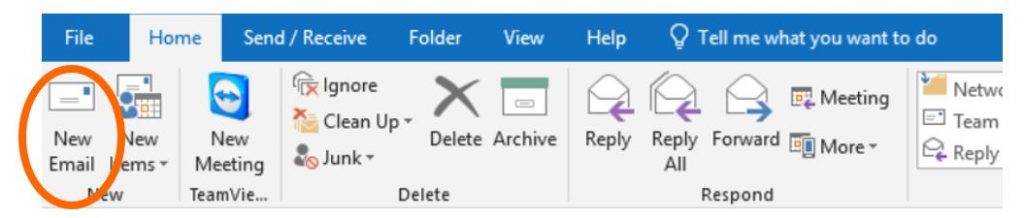
Open outlook as you would ordinarily do select the option to create an email as you would typically do.
A new email window will then appear.
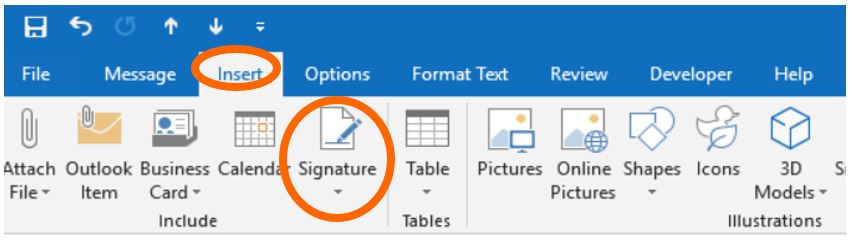
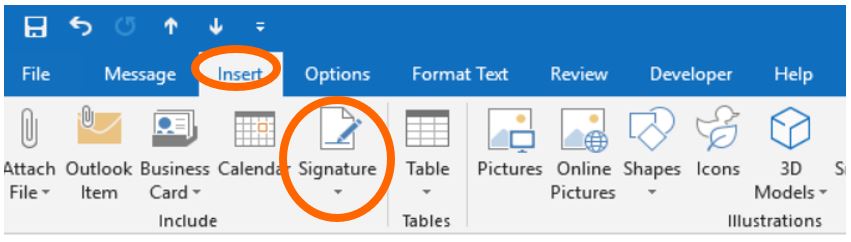
Select the option Insert and then Signature.
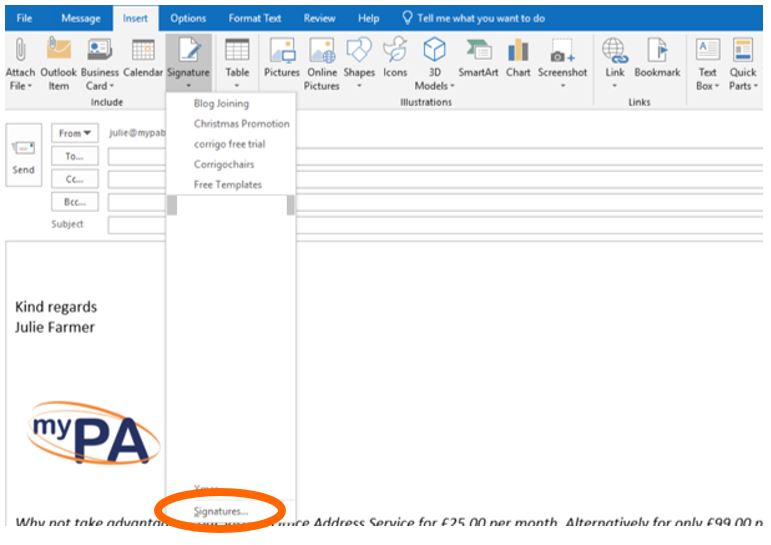
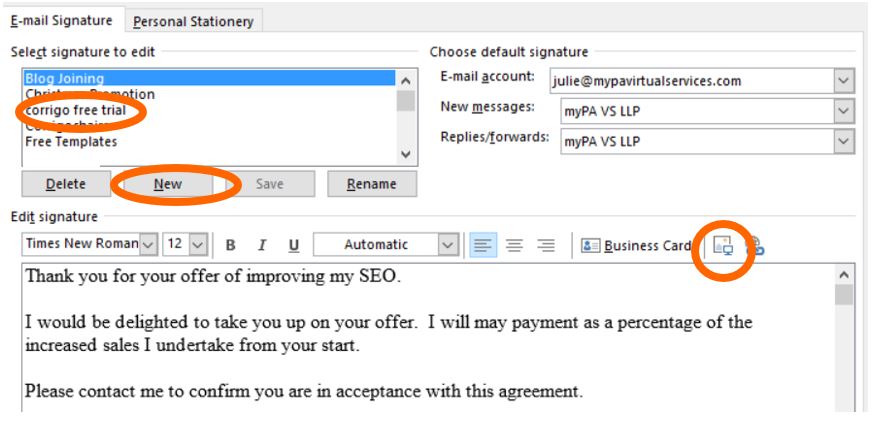
A list of all the current signatures installed on your computer will appear. At the very bottom is the word Signature. Select this option, see below.
A new window will appear.
Select the email signature you want to edit, if you have not created an email signature select the option New, see above, in this example I will collect Corrigo free trial. Enter the narrative you wish to have on the signature in the box provided. Then add your image by selecting add picture icon, see above. This will then require you to find the location of the image on your computer or server.
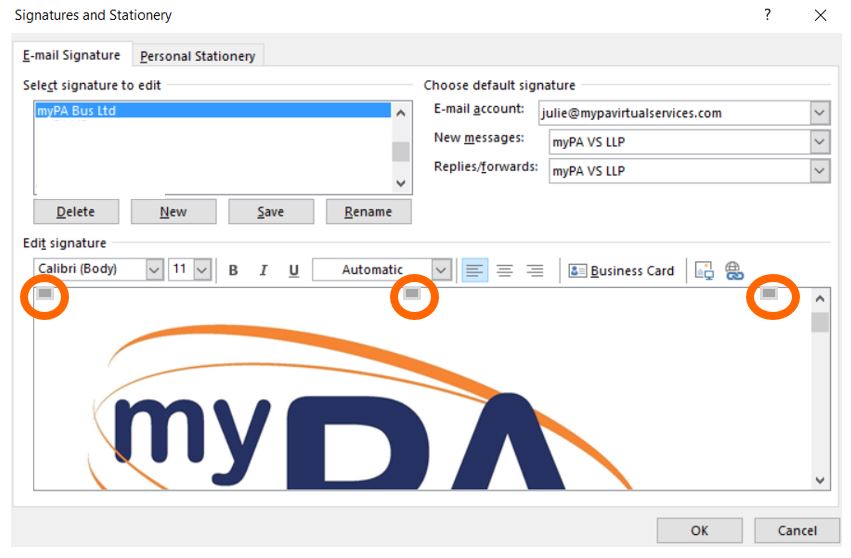
Once the image has been selected, it will appear in the dialogue box. See below.
Using your mouse, click ONCE on the image. You will notice little squares appearing on the image, see below.
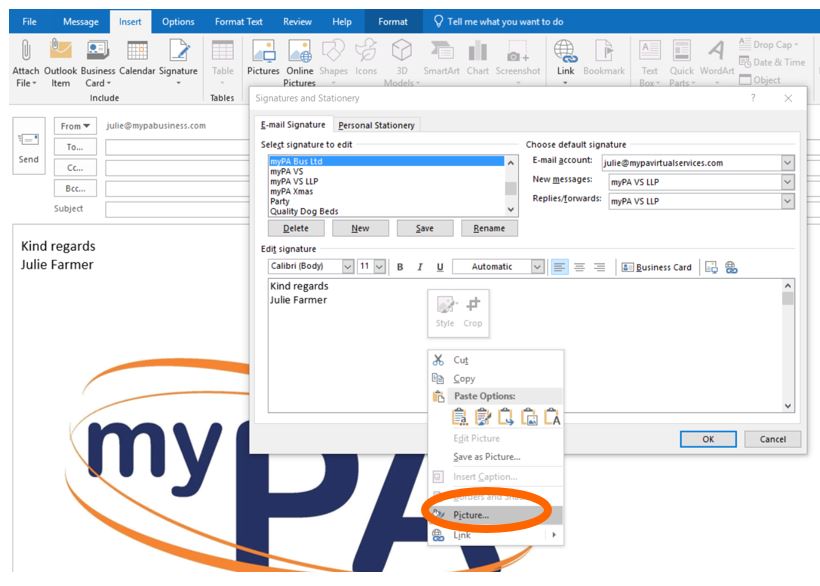
Once these little squares appear, press the right-hand button on your mouse and click once only.
A new screen will appear. Select the option Picture, see below.
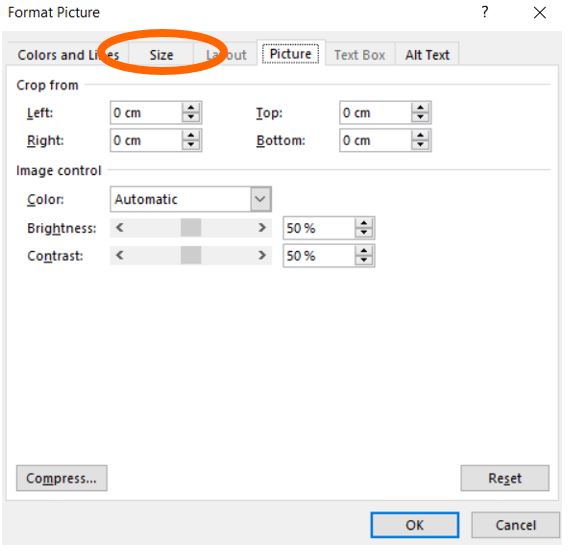
This will open another window, see below. On this window select the option Size, see below.
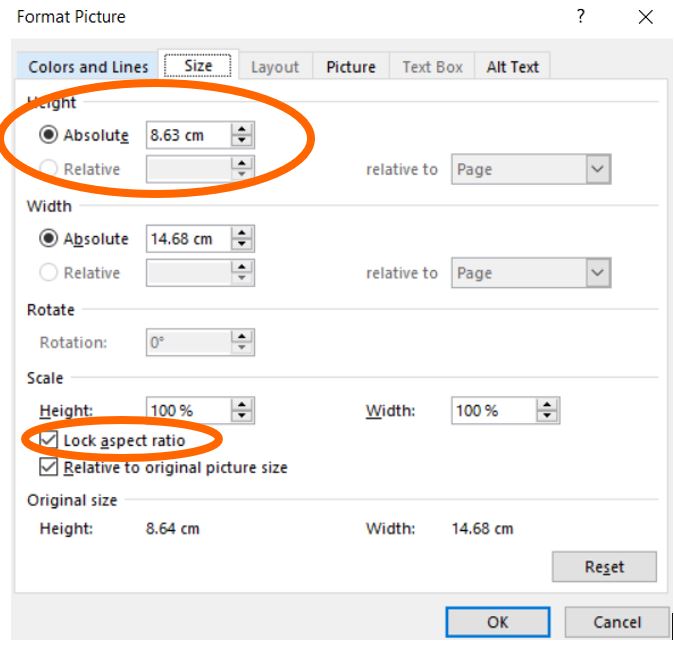
The following screen will appear. It is from here that you can now resize your image. Please make sure that the Lock aspect ratio option is selected. If you have decided that 7.63 cm would be perfect, enter 7.63 in the Height option and press the enter button only. This will automatically adjust the Width.
Once the image is of the right size, please copy this narrative and place it under the image. Then select OK.
When you think of a PA or a Secretary, you immediately think of someone organised, who is ultra-efficient and has their hand on the heartbeat of the department or their Boss’s Day. In effect, being proactive. Being Proactive is management speech stating that ‘a person is creating or controlling a situation rather than just responding to it after it has happened’. (more…)
Welcome to our online magazine from Julie and the team. If you have been on one of Julie’s training courses, you know she is passionate about PA, EAs and Secretaries being the best they can be. She also has very strong opinions about what a PA, EA and Secretary should and shouldn’t do. If you have a question, or would like to add an article, please get in touch. We would love to hear from you.