What does a PA Do? and indeed, what is a PA. A PA is Personal Assistant to the manager, department or CEO. They provide administrative support and take care of their boss so that they can
What does a PA do?
Perform their jobs with ease and confidence. A Personal Assistant could also be called an Executive Assistant or even a Virtual PA or Virtual EA. In this article, I will use the term PA to cover all of above.
Being a Personal Assistant (PA) is like being a fine artist. You have to have the ability to see an end product using the raw materials you have available to you. Anticipate the likes and needs of those you are looking after, without them knowing or understanding what they like or dislike. A PA has to be meticulous about their time management, planning and organisational skills and then make these tasks look smooth and effortless. Any PA unable to master these three skills will inevitably find the role as a Personal Assistant difficult. A PA should have their finger on the proverbial button of any activity their boss is undertaking at any time. Not only that, a PA has to anticipate what the boss requires today tomorrow and next month.
So What does a PA do to make sure they are on the ball?
A PAs mantra or go to question should always be “What is the next question” their boss is going to ask. Ensure they can answer that question and then the next question their boss will ask. The standard Who, What, Where, When, Why and How questions should be applied to any and all tasks a PA undertakes. Once a PA has mastered this tool they will start to see and show improvements in their PA ability and demonstrate how capable and competent they are in their role.
All PAs need to demonstrate consistency in their workload and be as enthusiastic on Monday morning at 9 am as they are on Friday at 5 pm. They need to be effective and efficient in all the tasks that they undertake and become proactive instead of reactive. It is recommended that a PA schedules at least 60% of their working day. This will leave 40% of their day to be reactive. We, therefore, advise each PA to plan tasks in advance. Taking note of business deadlines and the expectation is essential. A PA will also have to remember their boss has deadlines that could rely on work they have to do.
PAs Personal Recommendations
We would also recommend that every PA take a few minutes at the end of the day to note at least five successes they have had that day. It is true to say that everyone will have a bad day at work at some point. Noting down any success they have will help any PA remember how good they are. How well they perform their job and organising their boss.
In conclusion, What does a PA Do?
When the role of a PA is performed correctly, it is a work of art. The position is seamless, timeless and a thing of beauty. Their boss will never know the amount of work, effort and organisational skills the PA will put into their role. All of this, to ensure that the boss has a perfect working environment so they can perform at their peak.
The PA is indeed the unsung hero of any organisation. It is time for all PAs to stand up and be proud of the jobs that they do. The tasks they undertake and show what a strong, determined woman can do. For more information about becoming a PA or attending a training course click here.
The PA Tips on this post are those that are highly recommended to become an effective PA. It is also vitally important that a PA keeps on track of all new technology, new ways of working and are open to any PA Tips they can glean from colleagues and even their boss.
Do you want to change the signature image in Outlook 2016 to make your emails look professional, elegant and smart? With more and more options in MS Office and outlook, sometimes we just need a few hints along the way. To make sure your signature image in outlook 2016 is perfect then just follow these very simple instructions.
Instructions to resize a Signature Image in Outlook 2016
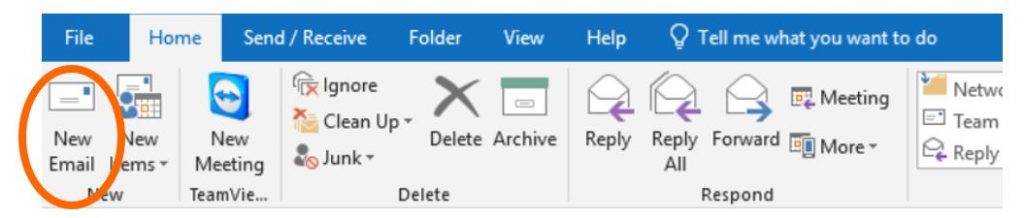
Open outlook as you would ordinarily do select the option to create an email as you would typically do.
A new email window will then appear.
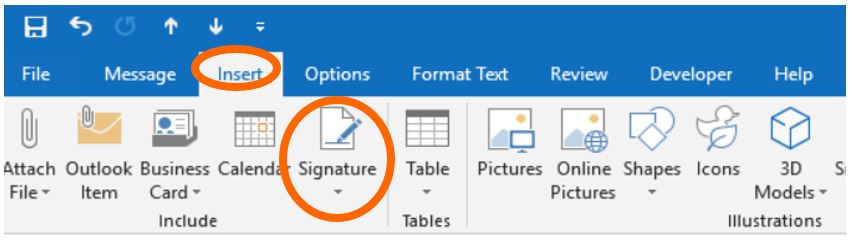
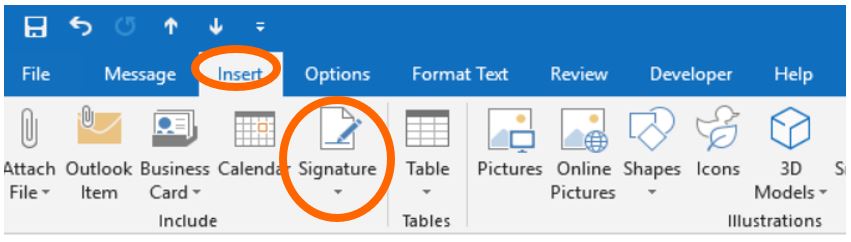
Select the option Insert and then Signature.
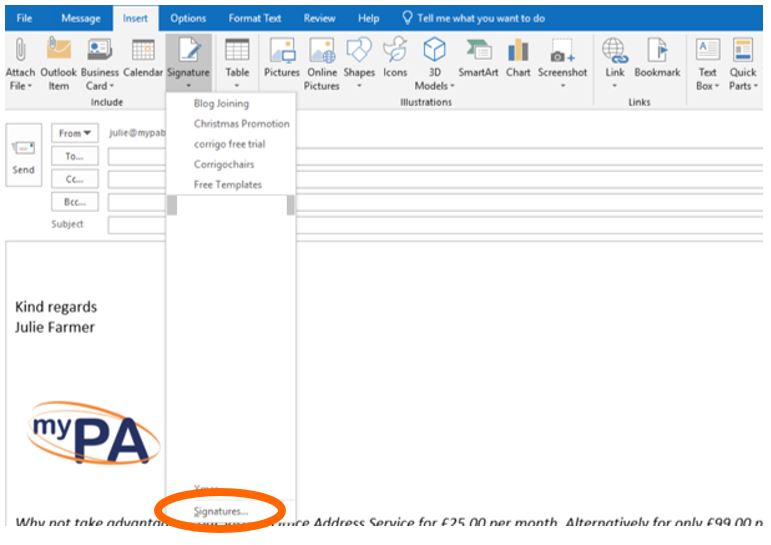
A list of all the current signatures installed on your computer will appear. At the very bottom is the word Signature. Select this option, see below.
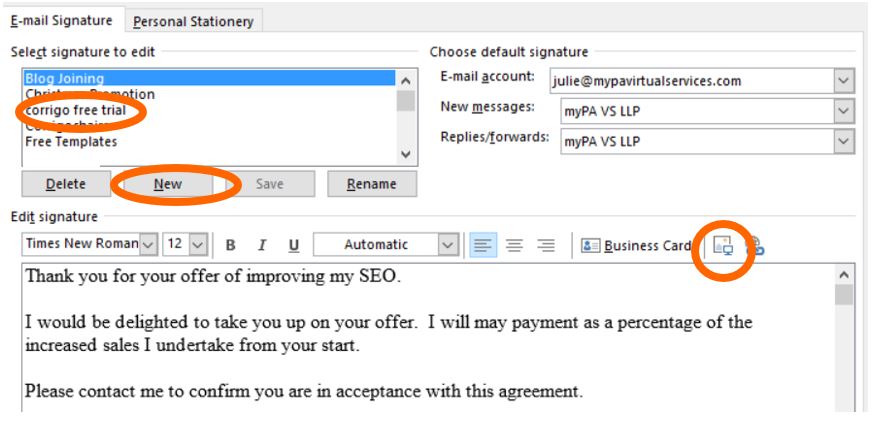
A new window will appear.
Select the email signature you want to edit, if you have not created an email signature select the option New, see above, in this example I will collect Corrigo free trial. Enter the narrative you wish to have on the signature in the box provided. Then add your image by selecting add picture icon, see above. This will then require you to find the location of the image on your computer or server.
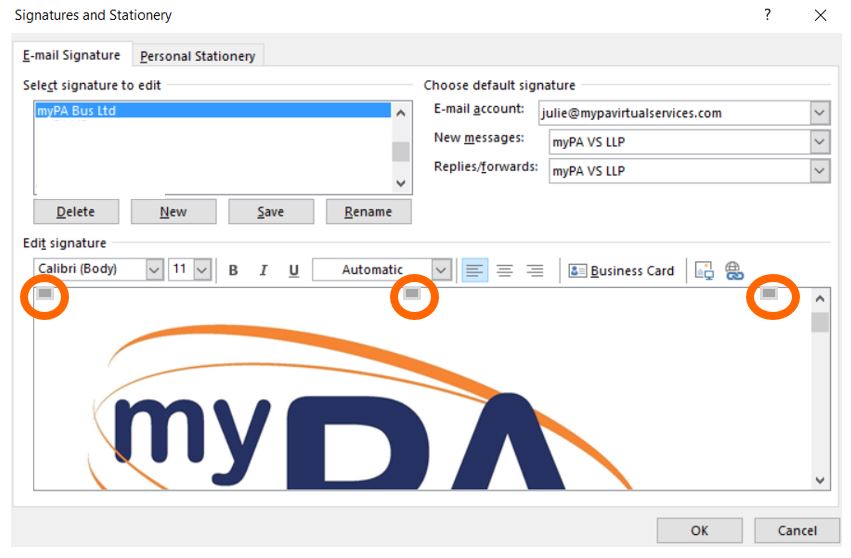
Once the image has been selected, it will appear in the dialogue box. See below.
Using your mouse, click ONCE on the image. You will notice little squares appearing on the image, see below.
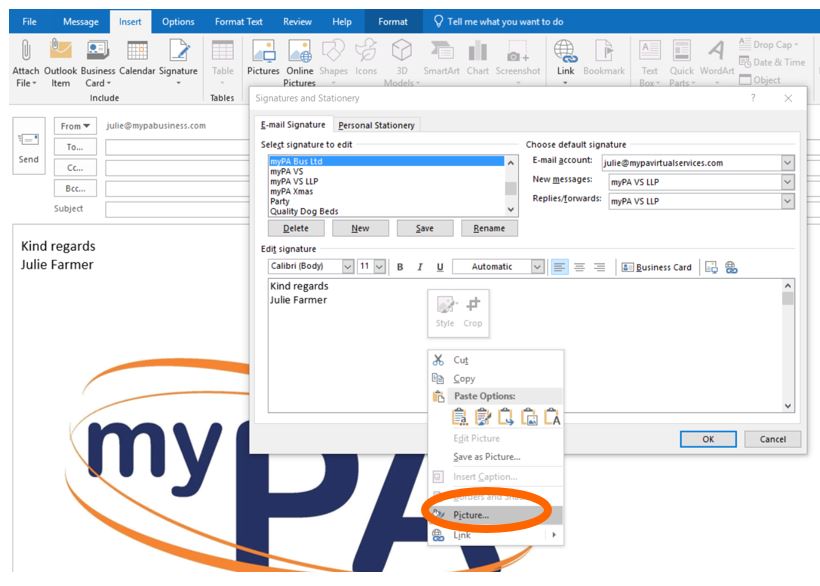
Once these little squares appear, press the right-hand button on your mouse and click once only.
A new screen will appear. Select the option Picture, see below.
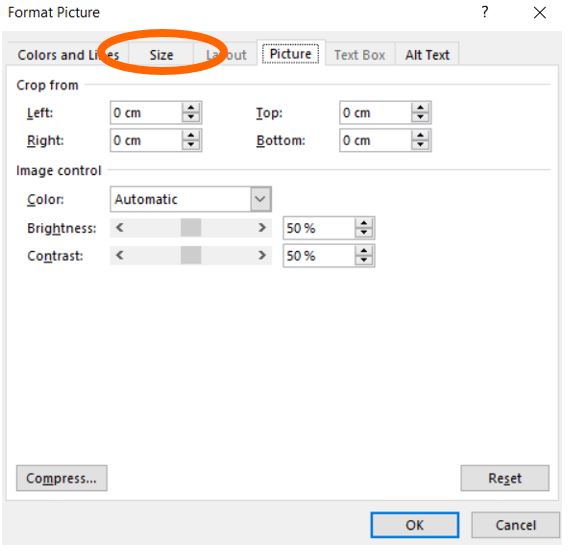
This will open another window, see below. On this window select the option Size, see below.
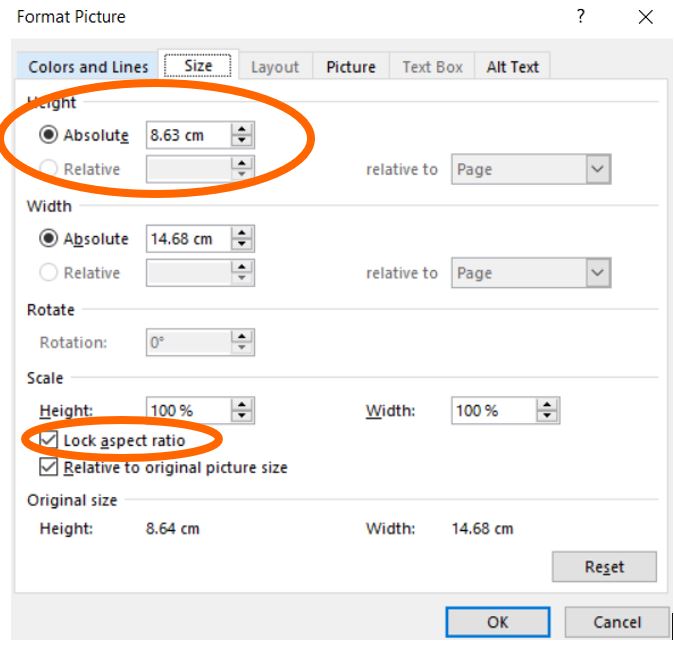
The following screen will appear. It is from here that you can now resize your image. Please make sure that the Lock aspect ratio option is selected. If you have decided that 7.63 cm would be perfect, enter 7.63 in the Height option and press the enter button only. This will automatically adjust the Width.
Once the image is of the right size, please copy this narrative and place it under the image. Then select OK.
Small Claims for Personal Assistants: What Every PA Should Know
As a PA or EA, you’re often the one expected to deal with the messy jobs no one else wants. Chasing late payments is one of them. A director might casually tell you, “Can you sort this out? They owe us £2,000.” Suddenly, you’re the one left untangling contracts, sending reminders, and figuring out whether the company should take legal action.
This is where understanding the small claims process becomes another tool in your professional toolkit. You may never need to issue a claim yourself, but knowing how it works shows you can protect your organisation’s interests and your boss’s time.
Why PAs and EAs Need This Knowledge
Part of supporting senior executives is being resourceful. It’s not just about diary management and travel booking—it’s about being the person who can say, “Yes, I know how that works, leave it with me.”
Small claims knowledge is particularly valuable when you’re:
Following up on unpaid invoices for your executive’s consultancy or side business
Supporting the finance team with administration
Helping to recover deposits, payments, or contracts gone wrong
Demonstrating that you understand the commercial risks your company faces
It’s one more way you can show initiative, problem-solving ability, and commercial awareness—all skills that make a PA indispensable.
Costs to Be Aware Of
Here’s the updated fee structure (July 2025) that you need to know if you ever have to brief your boss or prepare paperwork:
Issue fees for starting a claim:
Up to £300: £35
£300.01 to £500: £50
£500.01 to £1,000: £70
£1,000.01 to £1,500: £80
£1,500.01 to £3,000: £115
£3,000.01 to £5,000: £205
£5,000.01 to £10,000: £455
£10,000.01 to £200,000: 5% of the claim
Over £200,000: £10,000
Hearing fees if it goes to court:
Up to £300: £27
£300.01 to £500: £59
£500.01 to £1,000: £85
£1,000.01 to £1,500: £123
£1,500.01 to £3,000: £181
Over £3,000: £346
As a PA, being able to explain these numbers quickly and clearly to your boss is precisely the kind of detail that sets you apart.
Interest and Compensation
Another question your executive may ask is: “Can we add interest?”
The answer is yes. If there isn’t already a contract clause, statutory interest applies at 8% plus the Bank of England base rate. For business debts, you can also add compensation:
Under £1,000: £40
£1,000–£10,000: £70
Over £10,000: £100
Knowing these details means you’re not just passing the problem along—you’re providing solutions.
The Small Claims Process in Eight Steps (For PAs Who Need the Summary)
Send a final reminder, usually referred to as a Letter Before Action.
Collect the evidence – contracts, invoices, emails.
Choose how to claim – online through Money Claim Online or by using the N1 form.
Pay the court fee.
Wait 14 days for a response.
If no response, apply for judgment.
If defended, prepare for a hearing.
If they still don’t pay, enforce it through bailiffs or other methods.
This step-by-step guide is precisely the sort of “ready to brief” content that makes you invaluable when your boss asks, “Where do we stand with that unpaid invoice?”
Risks and Reality
It’s worth reminding your executive that winning a claim doesn’t always mean getting paid—if the debtor has no assets, enforcement can be difficult. But even starting the process can be enough to push people into settling. As a PA, part of your role is to flag these risks so decisions are informed, not just reactive.
How to take Court Action
The government has made an effort to simplify the process as much as possible. The easiest way to claim it is by completing the form online.
https://www.gov.uk/make-money-claim-online
Why This Matters for Your PA Career
Understanding processes like small claims gives you a reputation for being commercially aware. Senior executives want PAs who don’t just manage logistics but also understand the business landscape.
When you can say, “I know the costs, the timelines, and the options,” you prove that you’re not just an organiser—you’re a business partner. That’s precisely the shift from “assistant” to trusted right hand.
Next Steps for PAs Who Want to Stand Out
This fact sheet gives you the basics, but it’s just one example of the wider skills every PA and EA needs to thrive. From minute taking to negotiation, presentation skills to commercial awareness, the more confident you are, the more valuable you become.
When you think of a PA or a Secretary, you immediately think of someone organised, who is ultra-efficient and has their hand on the heartbeat of the department or their Boss’s Day. In effect, being proactive. Being Proactive is management speech stating that ‘a person is creating or controlling a situation rather than just responding to it after it has happened’. (more…)
Have you ever wondered what your net worth is, as a human being? What your experience from birth to right now, this very moment has made you worth? It is one of those questions we can often think about, but as women never answer or avoid at all costs. There are some women will go directly to their current hourly rate, in employment. There are some who will say instantly say I am worthless and those who will tell you they are worth a million pounds. The truth could be in-between all of the above.
With that in mind, let’s do a little task. This task could take you a few minutes, hours or days (especially if you decide to do the task truthfully). Arrange to get some time on your own, without any distractions, interruptions and in a quiet place that will allow you to think freely.
Now, grab a pen and paper and write down all your qualifications, even those swimming qualifications and gymnastic badges you had as a child. Include any exams you gained from school, college and or university. Don’t forget those extracurricular activities like piano or guitar qualifications. Just write them down and do not re-read them. Once you have finished, turn the piece of paper over. Then, on a separate piece of paper add all the experiences you have had over the last few years. Include your jobs, your home and family responsibilities. These will include your personal responsibilities. Those responsibilities that you do every day without even thinking about it. For example, do you have a pet that you look after or have older parents or younger siblings that depend on you? All of these experiences create value to you as a person. Once you have finished, I would like you to put these two lists away for 24 hours. Don’t read them, don’t look at them, just put them away.
24 Hours Later
Now, I would like you to take your lists and read them.
Read out aloud all the qualifications you have.
Read the list of all your experiences.
Did you find anything on these lists as a surprise?
Do you have more qualifications than you expected, do you have more experience than you realised?
Money is the key or is it?
Just for fun, on your qualifications list and experience list, how much do you think it would cost to get those qualifications and that experience if you were starting from scratch. State education cost per child circa £48,000. A degree can cost up £37,000 (without accommodation and living expenses). That is £85,000 we have had spent on us already, and we have not even started on our experience!
Now ask yourself the question, ‘If you had to pay someone else, with all those skills, what would their hourly rate be?’ It could be argued that this be your net worth.
Personal Reflection on Your Net Worth
I undertook this task a few years ago, and I was surprised and a little intimidated by the person who had acquired all my skills and experiences. We take ourselves for granted so often, that sometimes we just need to stop, take a look at ourselves and congratulate us for what we have done and what we will be doing in the future.
Your net worth is not the amount you get paid. It is the amount of money you would have to pay someone to do what you do, daily.
Welcome to our online magazine from Julie and the team. If you have been on one of Julie’s training courses, you know she is passionate about PA, EAs and Secretaries being the best they can be. She also has very strong opinions about what a PA, EA and Secretary should and shouldn’t do. If you have a question, or would like to add an article, please get in touch. We would love to hear from you.